Chapter 17: Implementation Roadmap
Learning Objectives
After completing this chapter, you will be able to:
- Develop a phased approach to implementing OCM capability
- Identify quick wins that demonstrate early value
- Build organizational support for OCM investment
- Create sustainable OCM capability over time
- Measure and demonstrate OCM value
Implementation Toolkit Download
To support your OCM implementation, we provide a comprehensive Excel workbook with practical templates and tools:
Download OCM Implementation Guidance Workbook (Excel)
The workbook includes 13 ready-to-use worksheets:
| Worksheet | Purpose |
|---|---|
| Implementation Roadmap | Phase-by-phase checklist with 25 activities |
| ADKAR Assessment | Individual and group ADKAR scoring template |
| Stakeholder Analysis | Power/Interest matrix and engagement planning |
| Communication Plan | Message planning with channels and schedules |
| Training Plan | Role-based training curriculum tracking |
| Sponsorship Tracker | Sponsor activities and effectiveness monitoring |
| Resistance Log | Resistance identification and mitigation |
| KPI Dashboard | Six OCM KPIs with tracking tables |
| Maturity Assessment | Five-level maturity scoring across 8 dimensions |
| CSF Checklist | Eight Critical Success Factors evaluation |
| Risk Register | OCM-specific risk identification and mitigation |
| Change Impact | Impact assessment by stakeholder group |
All worksheets include dropdown validations, pre-formatted tables, sample data, and reference guides.
Implementing OCM Capability
Implementing OCM capability is itself a change initiative that requires change management. Organizations cannot simply declare that OCM will be practiced—they must build the methodology, skills, tools, and culture that enable effective OCM over time.
This chapter provides a practical roadmap for organizations at any starting point. Whether you’re establishing OCM from scratch, formalizing informal practices, or advancing mature capability, the roadmap provides guidance for systematic improvement.
Implementation Approaches
Organizations typically follow one of three approaches:
Big Bang: Implement comprehensive OCM capability across the organization simultaneously. Best for organizations with strong executive support, available resources, and urgent need.
Phased Rollout: Build OCM capability incrementally, starting with selected areas and expanding over time. Appropriate for most organizations; balances ambition with practicality.
Pilot-Based: Prove OCM value on selected projects before broader implementation. Best for organizations where OCM value must be demonstrated to gain support.
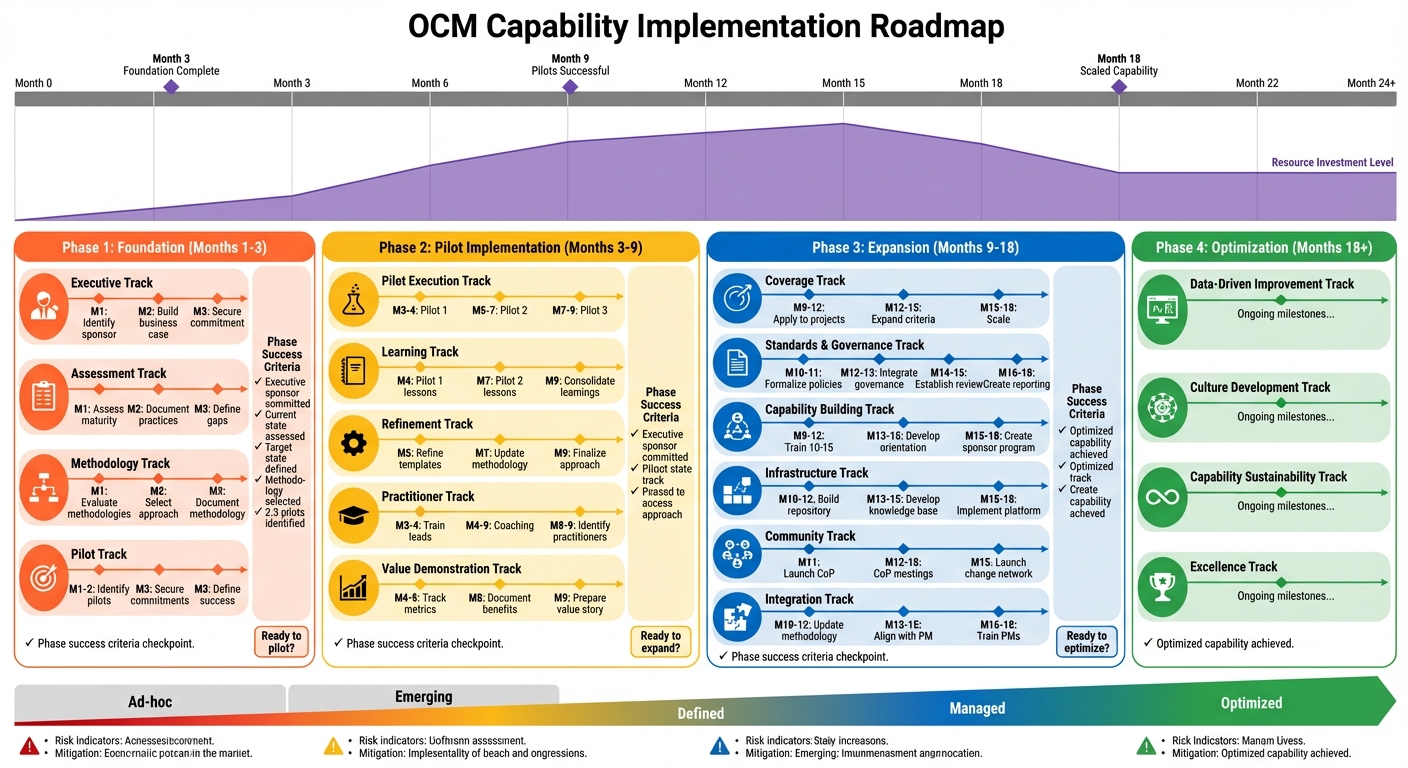
Figure 17.1 - OCM Capability Implementation Roadmap: Building OCM capability is a phased 18-24 month journey from foundation through optimization. Parallel activity tracks show concurrent workstreams with clear milestones and success criteria at each phase.
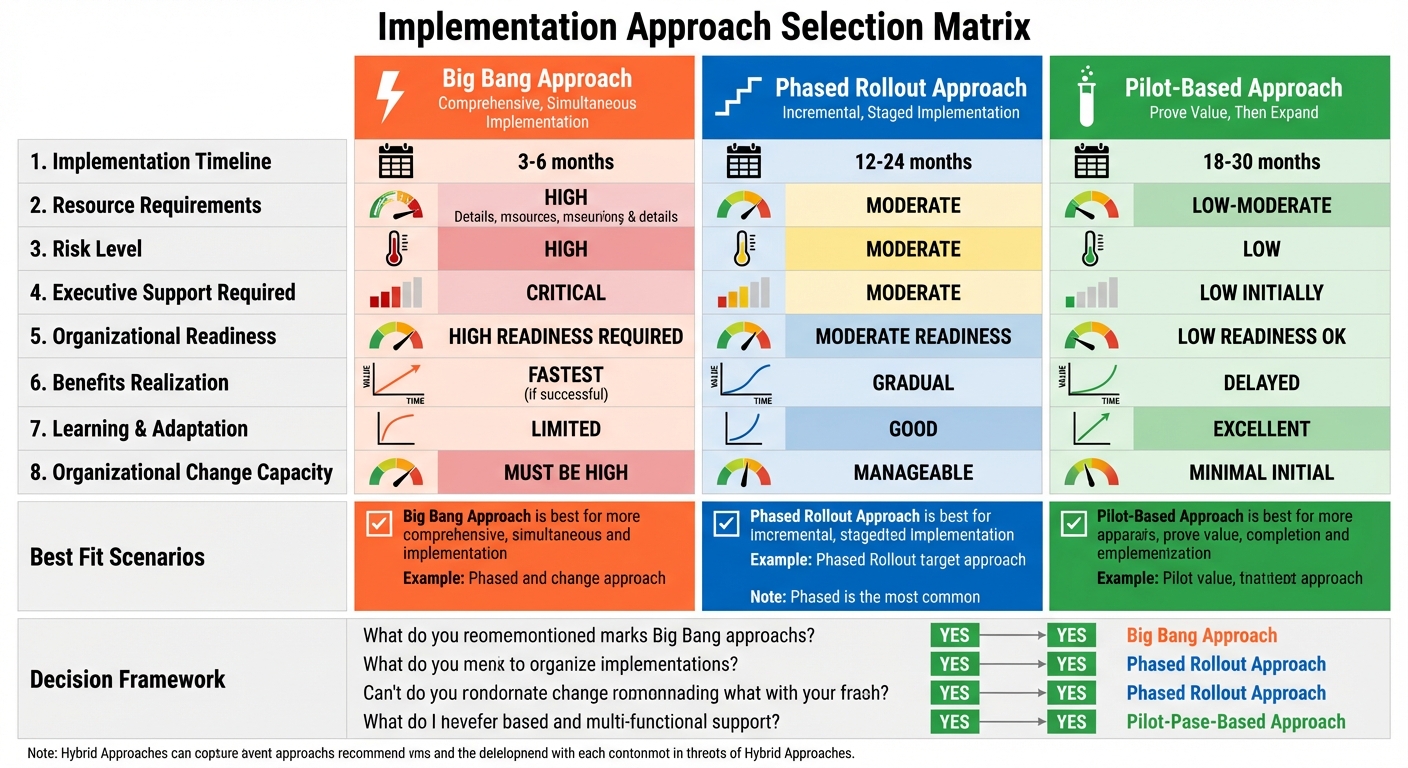
Figure 17.2 - Implementation Approach Selection Matrix: Three approaches to implementing OCM capability suit different organizational contexts. Phased Rollout is most common, balancing speed, risk, and learning. Select based on resources, readiness, and urgency.
Phase 1: Foundation (Months 1-3)
Objectives
- Establish executive support for OCM
- Assess current state and define target state
- Select initial OCM methodology
- Identify pilot projects
Key Activities
Secure Executive Sponsorship
- Identify executive sponsor for OCM capability building
- Build business case for OCM investment
- Gain commitment for resources and support
- Establish governance for OCM implementation
Assess Current State
- Evaluate current OCM maturity using assessment framework
- Identify existing OCM practices and practitioners
- Understand organizational readiness for OCM
- Document lessons from past changes (successful and unsuccessful)
Define Target State
- Define OCM vision and objectives
- Establish target maturity level
- Identify key capabilities to build
- Set success metrics
Select Methodology
- Evaluate available OCM methodologies (Prosci, Kotter, custom)
- Select or adapt methodology for organizational context
- Document methodology approach
- Identify required templates and tools
Identify Pilots
- Select 2-3 projects for initial OCM application
- Ensure pilot diversity (size, type, risk level)
- Secure pilot sponsor commitment
- Establish pilot success criteria
Deliverables
- OCM business case and executive sponsorship
- Current state assessment and gap analysis
- OCM vision, objectives, and success metrics
- Selected methodology and approach
- Identified pilot projects
Phase 2: Pilot Implementation (Months 3-9)
Objectives
- Apply OCM methodology to pilot projects
- Learn and refine approach based on experience
- Demonstrate OCM value through pilot success
- Develop initial OCM practitioners
Key Activities
Apply Methodology to Pilots
- Execute OCM activities on each pilot project
- Use standard methodology and templates
- Document approach and adaptations
- Track OCM metrics and outcomes
Develop OCM Practitioners
- Train pilot OCM leads on methodology
- Provide coaching and support during pilots
- Build practical experience and confidence
- Identify practitioners for expanded role
Capture Lessons Learned
- Document what works and what doesn’t
- Refine methodology based on experience
- Update templates and tools
- Share learnings across pilot teams
Demonstrate Value
- Track adoption outcomes on pilots vs. comparison projects
- Document quantifiable benefits
- Collect stakeholder testimonials
- Prepare value demonstration for leadership
Success Indicators
- Pilot projects achieve adoption targets
- Pilots demonstrate measurably better outcomes
- Methodology refined based on practical experience
- Initial practitioner cadre trained and experienced
- Executive confidence in OCM approach established
Phase 3: Expansion (Months 9-18)
Objectives
- Expand OCM application beyond pilots
- Establish OCM standards and governance
- Build broader OCM capability
- Integrate OCM into project practices
Key Activities
Expand OCM Coverage
- Apply OCM to additional projects meeting criteria
- Gradually expand criteria to include more projects
- Scale practitioner capacity to meet demand
- Build change agent networks
Establish Standards and Governance
- Formalize OCM policies and standards
- Integrate OCM into project governance
- Establish OCM quality review processes
- Create OCM reporting mechanisms
Build Capability
- Expand OCM training to more practitioners
- Develop manager OCM orientation
- Create sponsor development program
- Build OCM community of practice
Integrate with Project Management
- Embed OCM activities in project methodology
- Integrate OCM deliverables with project artifacts
- Align OCM and project governance
- Train project managers on OCM integration
Success Indicators
- OCM applied consistently to qualifying projects
- Standards and governance operational
- Growing cadre of capable OCM practitioners
- OCM integrated into project practices
- Measurable improvement in change outcomes
Phase 4: Optimization (Months 18+)
Objectives
- Optimize OCM practices based on data
- Build change-ready culture
- Achieve sustainable OCM capability
- Continuously improve practices
Key Activities
Data-Driven Improvement
- Analyze OCM metrics across projects
- Identify patterns and improvement opportunities
- Benchmark against industry practices
- Implement targeted improvements
Culture Development
- Embed change readiness in organizational culture
- Build resilience and adaptability
- Recognize and reward effective change leadership
- Integrate OCM into leadership development
Capability Sustainability
- Ensure ongoing practitioner development
- Maintain methodology currency
- Sustain executive sponsorship
- Plan for practitioner succession
Continuous Improvement
- Regularly assess OCM maturity
- Update practices based on learning
- Innovate approaches for emerging needs
- Contribute to OCM body of knowledge
Success Indicators
- Consistent achievement of adoption targets
- Change-ready culture measurable in surveys
- Sustainable OCM function and capability
- Continuous improvement demonstrated
- Recognition as change management leader
Building Support
Making the Business Case
Build a compelling business case for OCM investment:
Cost of Change Failure
- Calculate cost of failed or struggling changes
- Include direct costs (rework, extended timelines)
- Include indirect costs (productivity loss, turnover)
- Quantify risk of continued failures
Benefits of Effective OCM
- Research shows OCM increases success probability by 3-6x
- Faster time to value through quicker adoption
- Reduced resistance and smoother implementation
- Higher sustained adoption and benefits realization
Investment Required
- OCM resources (people, tools, training)
- Phased investment aligned with capability building
- Comparison to overall project investment (typically 2-5%)
Demonstrating Value
Continuously demonstrate OCM value:
Leading Indicators
- Awareness and engagement levels
- Training completion and proficiency
- Stakeholder satisfaction with OCM support
Lagging Indicators
- Adoption rates compared to targets
- Time to proficiency
- Resistance levels
- Benefits realization
Comparative Analysis
- Compare outcomes on projects with/without OCM
- Track improvement over time as capability matures
- Benchmark against industry standards
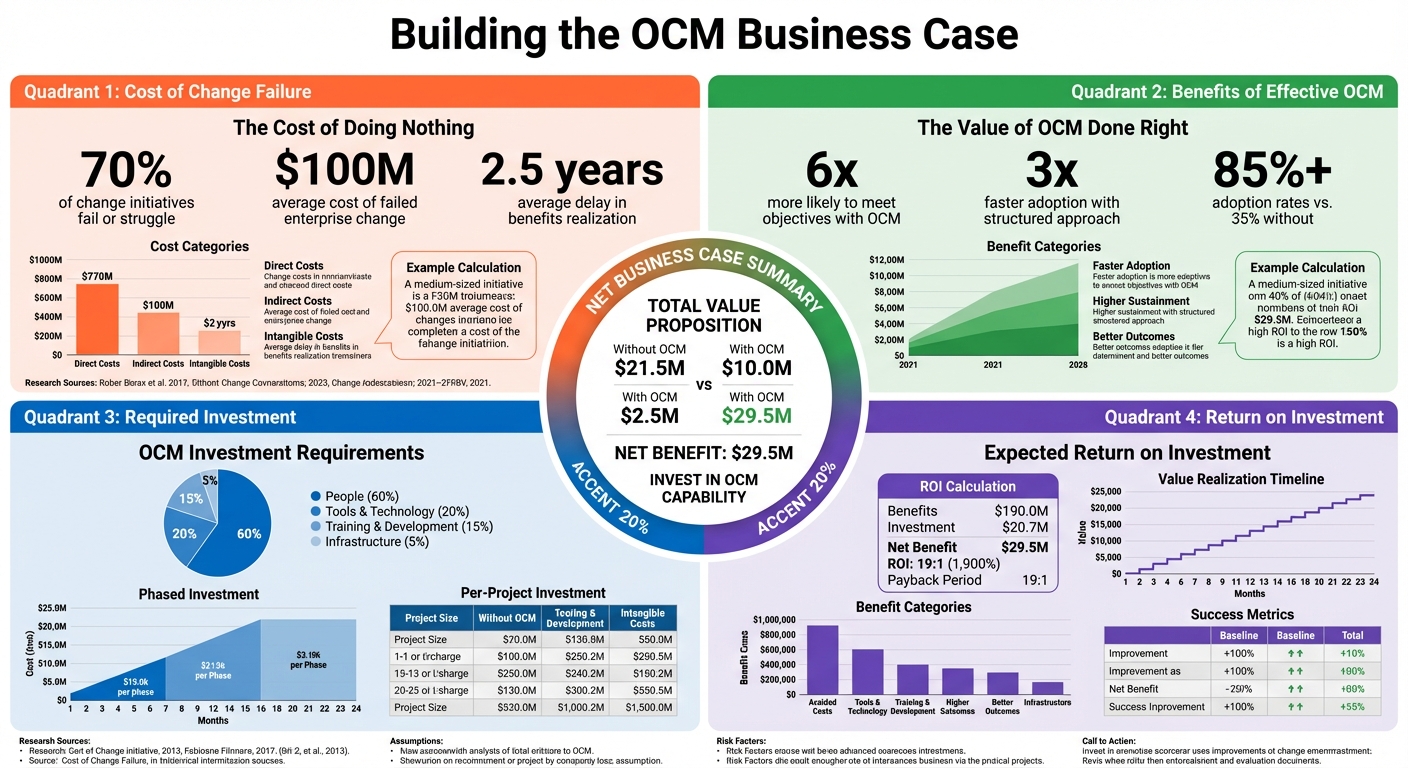
Figure 17.3 - Building the OCM Business Case: Compelling business case shows cost of change failure, benefits of effective OCM, required investment, and expected ROI. Typical ROI ranges from 10:1 to 40:1, with payback in 6-9 months.
Key Success Factors
Executive Sponsorship
Strong, sustained executive support is essential. Sponsors must champion OCM, allocate resources, and hold leaders accountable.
Quick Wins
Early demonstrations of value build momentum and support. Select pilots with high visibility and probability of success.
Practitioner Development
Build capable practitioners who can deliver quality OCM. Invest in training, coaching, and experience-building.
Integration
Embed OCM into existing practices rather than creating parallel processes. Integration increases adoption and sustainability.
Measurement
Track and report on OCM effectiveness. Data enables improvement and demonstrates value.
Patience
Building OCM capability takes time. Expect 2-3 years for significant maturity advancement. Maintain commitment through the journey.
Key Takeaways
- Implementing OCM is itself a change that requires careful planning and change management
- Phased implementation builds capability incrementally while demonstrating value
- Pilots prove value before broader investment and build organizational support
- Quick wins build momentum and executive confidence in the approach
- Sustainability requires ongoing investment in people, processes, and culture
- Measurement demonstrates value and enables continuous improvement
Summary
Implementing OCM capability is a journey that requires sustained commitment over multiple years. The phased roadmap provides a practical approach that builds capability incrementally while demonstrating value at each stage.
Success depends on strong executive sponsorship, capable practitioners, integration with existing practices, and continuous measurement and improvement. Organizations that commit to this journey achieve significantly better change outcomes and build a competitive advantage in their ability to adapt and evolve.
The investment in OCM capability pays dividends on every future change initiative. Organizations with mature OCM capability implement changes faster, with less resistance, and with higher sustained adoption—delivering the benefits that motivated the change in the first place.