A Practical Adoption Guide for Structured Prompting
After completing this chapter, you will be able to:
Plan a structured prompting implementation Define skill development pathways Select appropriate tools and resources Manage organizational change Measure adoption progress The journey to prompting mastery follows a predictable path:
Figure 17.1: The four-phase adoption journey from learning basics to leading others in structured prompting mastery.
Level Name Characteristics Time to Achieve 1 Novice Learning basics, inconsistent results Starting point 2 Practitioner Using frameworks, improving consistency 4-8 weeks 3 Expert Systematic optimization, teaching others 3-6 months 4 Master Creating frameworks, leading practices 6-12+ months
Understand core concepts and terminology Learn the 7 Prompting Pillars Develop basic prompting skills Build initial prompt library Week Focus Activities 1 Concepts Read Chapters 1-3, complete self-assessment, practice 10 prompts, start journal 2 Frameworks Read Chapter 4, learn CRAFT/RTF, apply to 5 real tasks, document results 3 Core Skills Read Chapters 5-7, practice context/instructions/output formats 4 Review Complete assessment, identify improvements, create 3 templates, set Phase 2 goals
Area Verify Knowledge Define terminology, explain 7 Pillars, understand tokens, know pattern selection Skills Construct CRAFT prompts, provide context, specify outputs, identify issues Artifacts Prompting journal started, 3+ templates created, prompt library begun
Apply frameworks to daily work Build consistent prompting habits Expand prompt library Begin systematic improvement Weeks Focus Activities 5-6 Daily Application Use structured prompts for all AI, read Chapters 8-11, track success/failure 7-8 Template Building Create templates for frequent tasks, test with different inputs, refine 9-10 Quality Focus Read Chapters 12-14, implement quality checklist, conduct A/B tests 11-12 Consolidation Review prompts, update templates, organize library, prepare for Phase 3
When Ask Yourself Before What’s my goal? What context is needed? What output format? Which framework? During Am I specific enough? All requirements included? Any ambiguity? After Did I get what I needed? What worked? What could improve? Save as template?
Implement systematic testing Track performance metrics Optimize existing prompts Share knowledge with others Month Focus Activities 4 Testing Infrastructure Read Chapters 13-14, create benchmark suite, establish baselines, set up tracking 5 Optimization Cycles Run A/B tests, iterate based on data, document improvements, build regression tests 6 Knowledge Sharing Read Chapters 15-16, create team docs, train colleagues, establish best practices
Metric Baseline Target Method Task completion __% +15% Track success rate Re-prompt rate __% -50% Count iterations Time to result __ min -30% Measure elapsed time Output quality __/5 +0.5 Self-assessment
Mentor others in structured prompting Contribute to organizational practices Stay current with evolving techniques Innovate and create new patterns Area Activities Mentoring Train new members, review others’ prompts, lead workshops, create training materials Leadership Define org standards, build shared libraries, establish review processes, drive improvement Innovation Research new techniques, experiment with cutting-edge methods, contribute to community Continuous Learning Follow AI research, attend conferences, network with practitioners, update practices
# My Structured Prompting Roadmap

## Current State
- Self-assessment score: ___/15
- Current maturity level: ___
- Primary use cases: ___
- Main challenges: ___

## Goals
- Target maturity level: ___
- Timeline: ___
- Priority skills: ___
- Key outcomes: ___

## Phase 1: Foundation (Weeks 1-4)
Week 1: ___
Week 2: ___
Week 3: ___
Week 4: ___
Milestone: Complete foundation checklist

## Phase 2: Adoption (Weeks 5-12)
Focus areas: ___
Key habits to build: ___
Templates to create: ___
Milestone: Consistent daily use

## Phase 3: Optimization (Months 4-6)
Metrics to track: ___
Prompts to optimize: ___
Testing approach: ___
Milestone: Measurable improvement

## Phase 4: Mastery (Ongoing)
Teaching goals: ___
Innovation areas: ___
Community involvement: ___
Milestone: Recognized expertise

## Resources Needed
- Time: ___ hours/week
- Tools: ___
- Support: ___
- Training: ___
Stage Key Questions Awareness Why are we doing this? What’s the benefit? How does it affect my work? Desire What’s in it for me? How will it make my job easier? Who else is doing this? Knowledge What do I need to learn? Where are resources? Who can help? Ability How do I practice? What support is available? How long until proficient? Reinforcement How is progress measured? What recognition exists? How do we sustain this?
Phase Weekly Hours Duration Total Hours Foundation 3-5 hrs 4 weeks 12-20 hrs Adoption 2-3 hrs 8 weeks 16-24 hrs Optimization 2-4 hrs 12 weeks 24-48 hrs Mastery 1-2 hrs Ongoing Ongoing
Level Tools Essential (Free)AI assistant (ChatGPT, Claude), text editor, this handbook Helpful (Various)Prompt management tool, version control (Git), collaboration platform Advanced (Enterprise)API access, custom models, monitoring tools, security controls
Phase Complete When Phase 1 Explain 7 Pillars from memory, use frameworks without reference, 3+ templates created, 30% fewer re-prompts Phase 2 Structured prompting is default, 10+ tested templates, consistent quality, can teach basics Phase 3 Metrics show improvement, A/B testing routine, documented best practices, team learning from you Phase 4 Recognized as expert, created original frameworks, active in community, continuous improvement
Category Measure Skills (1-5)Clarity, context engineering, output specification, advanced techniques, quality assessment, teaching Practices (Y/N)Consistent frameworks, document prompts, systematic testing, track metrics, share knowledge Outcomes First-try completion %, quality score /5, templates in use, colleagues trained
Adoption takes time —expect 4-6 months for solid proficiencyPhase-based approach provides structure and milestonesConsistent practice matters more than intensive studyMeasurement drives improvement and motivationSharing knowledge accelerates organizational adoptionContinuous learning is essential as the field evolves Implementing structured prompting is a journey, not a destination. This roadmap provides a phased approach that takes you from novice to master through deliberate practice, systematic improvement, and knowledge sharing. Whether you’re working individually or leading a team, the key is consistent application of principles, regular measurement of progress, and commitment to continuous improvement.
What are the four phases of the adoption journey? What should you accomplish in Phase 1 (Foundation)? How do you measure progress in Phase 3 (Optimization)? What activities define Phase 4 (Mastery)? What are the key change management considerations for teams? Exercise 17.1: Personal Roadmap
Create your personal structured prompting roadmap:
Complete the self-assessment Set your goals and timeline Plan specific activities for each phase Identify resources you need Define how you’ll measure progress Exercise 17.2: Team Planning
If you’re leading or part of a team, draft a team adoption plan:
Assess current team capability Identify champions and supporters Plan training and enablement Define success metrics Create a 6-month roadmap 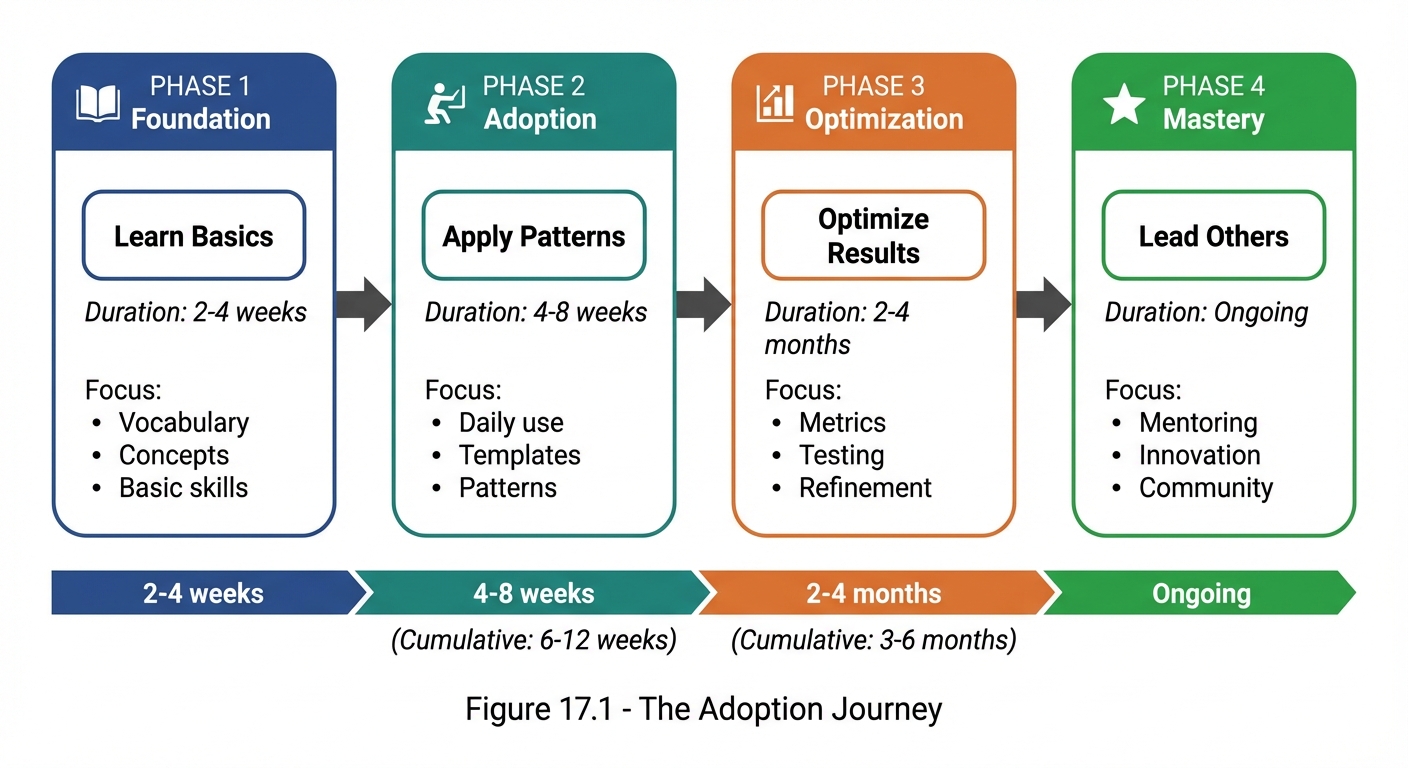 Figure 17.1: The four-phase adoption journey from learning basics to leading others in structured prompting mastery.