Chapter 1: Introduction to Structured Prompting
Understanding the Art and Science of Effective AI Communication
Learning Objectives
After completing this chapter, you will be able to:
- Define structured prompting and explain its importance
- Describe the evolution of prompt engineering
- Articulate the business value of effective prompting
- Navigate this handbook effectively
- Assess your current prompting skill level
What is Structured Prompting?
Structured prompting is a systematic approach to crafting inputs for AI systems that consistently produces high-quality, relevant, and actionable outputs. Unlike casual, ad-hoc interactions with AI, structured prompting applies proven frameworks, patterns, and principles to transform AI communication from guesswork into a repeatable, optimizable discipline.
The Core Idea
At its heart, structured prompting recognizes that:
The quality of AI output is directly proportional to the quality of the input provided.
This isn’t just about writing “better” prompts—it’s about understanding why certain prompts work and applying that understanding systematically.
Structured vs. Unstructured Prompting
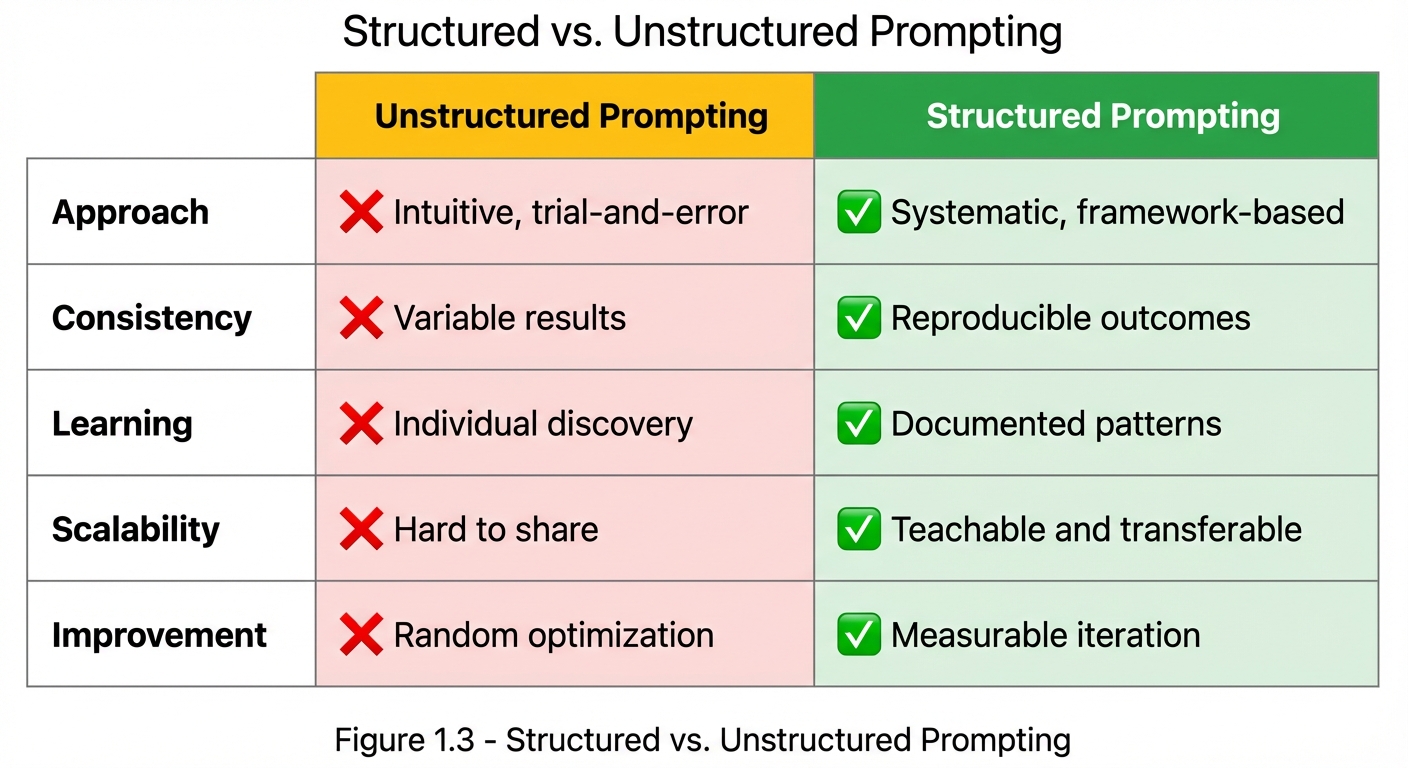 Figure 1.3: Structured vs. Unstructured Prompting - Structured prompting transforms AI interaction from guesswork into a systematic, repeatable discipline with measurable results.
The Evolution of Prompt Engineering
The Early Days (2020-2022)
When large language models first became widely accessible, interactions were largely experimental:
- Users typed natural questions and hoped for the best
- Success was often serendipitous
- Knowledge was scattered and anecdotal
- Few systematic approaches existed
The Emergence of Patterns (2022-2023)
As usage grew, practitioners began noticing patterns:
- Certain prompt structures consistently worked better
- Role-playing (“Act as a…”) improved responses
- Providing examples (few-shot) enhanced accuracy
- Community knowledge began to accumulate
The Framework Era (2023-Present)
Today, prompt engineering has matured into a discipline:
- Documented frameworks and methodologies
- Academic research and empirical studies
- Professional roles and specializations
- Integration into software development practices
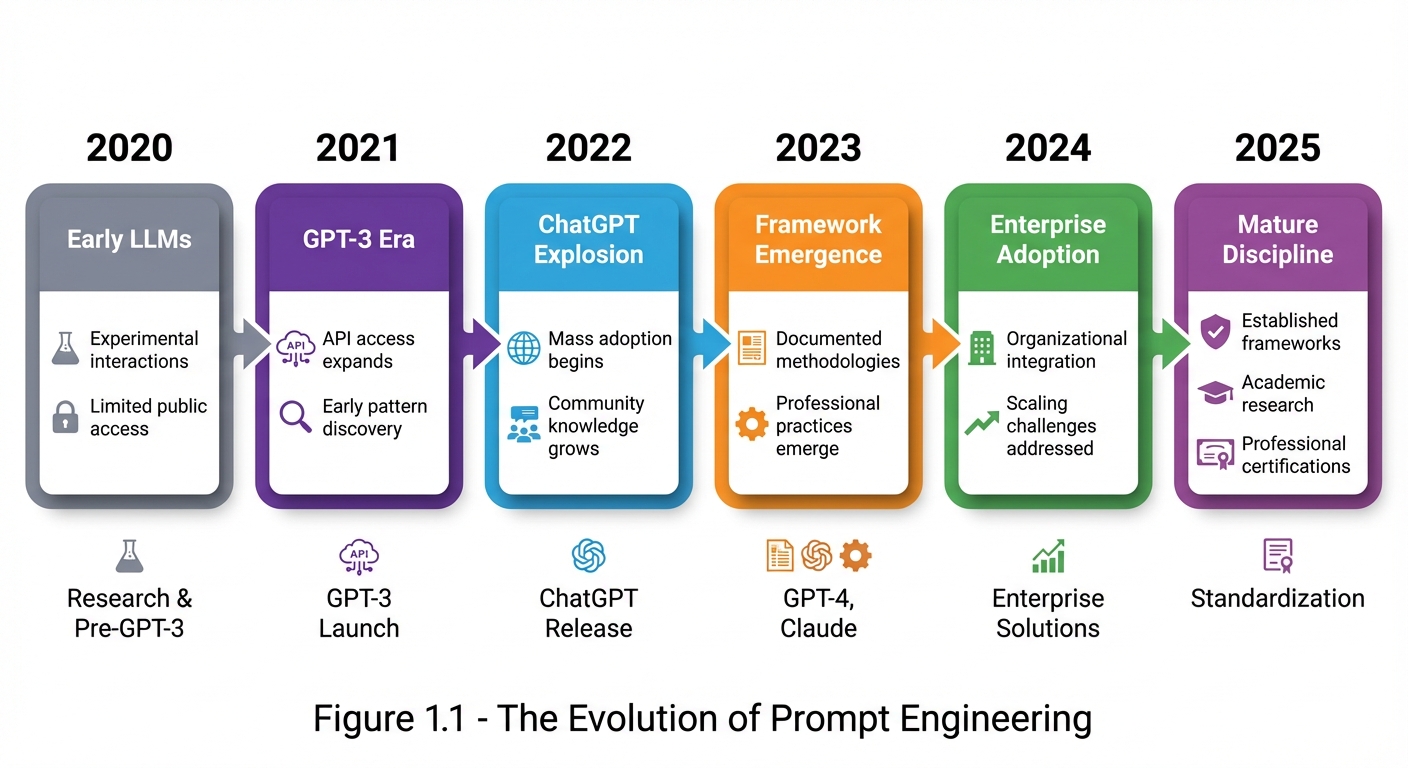 Figure 1.1: The Evolution of Prompt Engineering - From experimental LLM interactions in 2020 through today’s established discipline with documented frameworks, professional practices, and enterprise adoption.
Why Structured Prompting Matters
The Business Case
Organizations investing in AI capabilities face a critical question: How do we get consistent value from these tools? The answer increasingly lies in prompting competence.
Cost Efficiency
Poor prompts waste resources:
- Multiple iterations to get usable results
- API costs from unnecessary retries
- Human time spent reformulating requests
Quality Assurance
Structured approaches enable:
- Predictable output quality
- Reduced error rates
- Consistent brand voice and standards
Scalability
Frameworks allow:
- Knowledge transfer across teams
- Onboarding of new users
- Building prompt libraries
The Individual Case
For individual practitioners, structured prompting skills:
- Increase productivity: Get better results faster
- Reduce frustration: Know why things work
- Build expertise: Progress systematically
- Enhance career: Valuable, in-demand skill
The Prompting Challenge
Common Pain Points
Most users experience similar challenges:
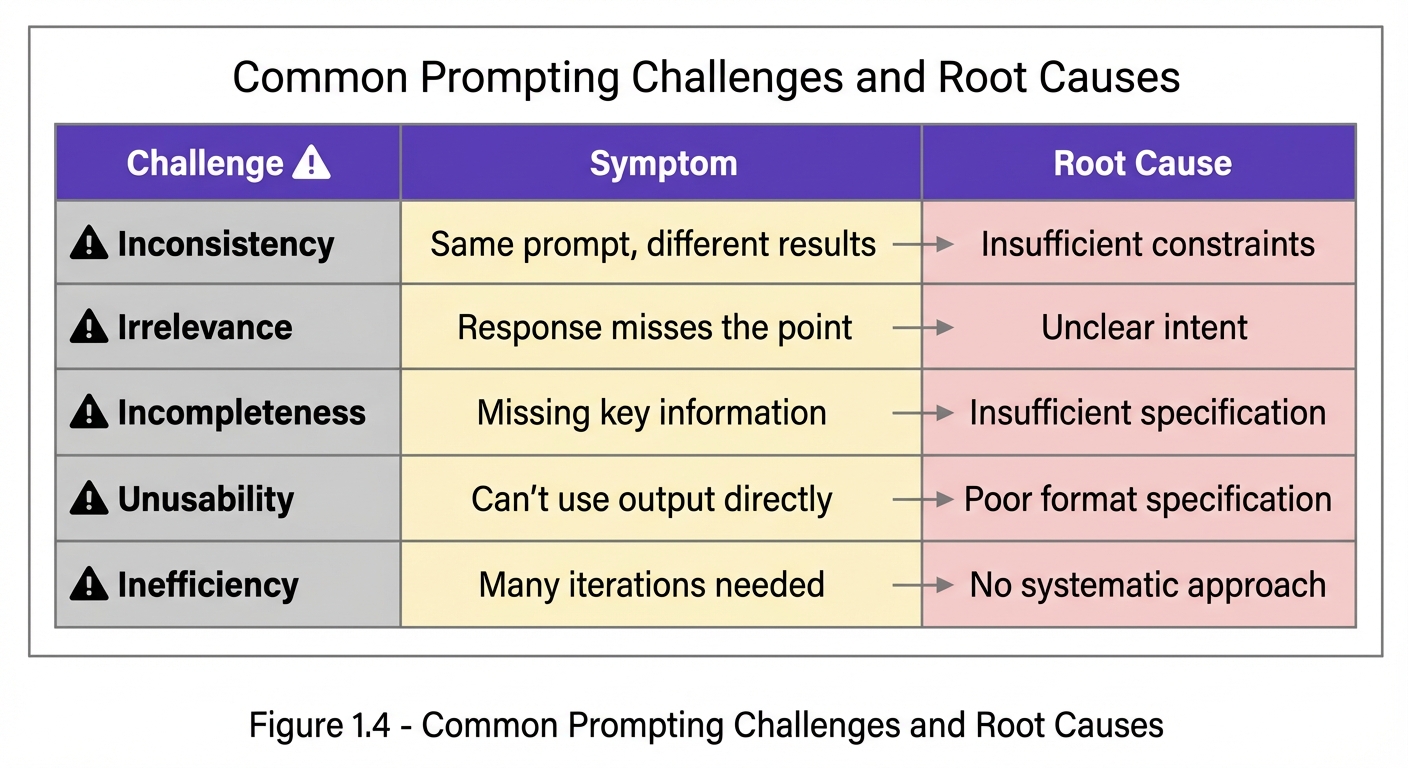 Figure 1.4: Common Prompting Pain Points - Understanding the root causes of prompting challenges enables targeted improvement through specific techniques covered in this handbook.
The Knowledge Gap
The gap between casual users and experts isn’t talent—it’s knowledge:
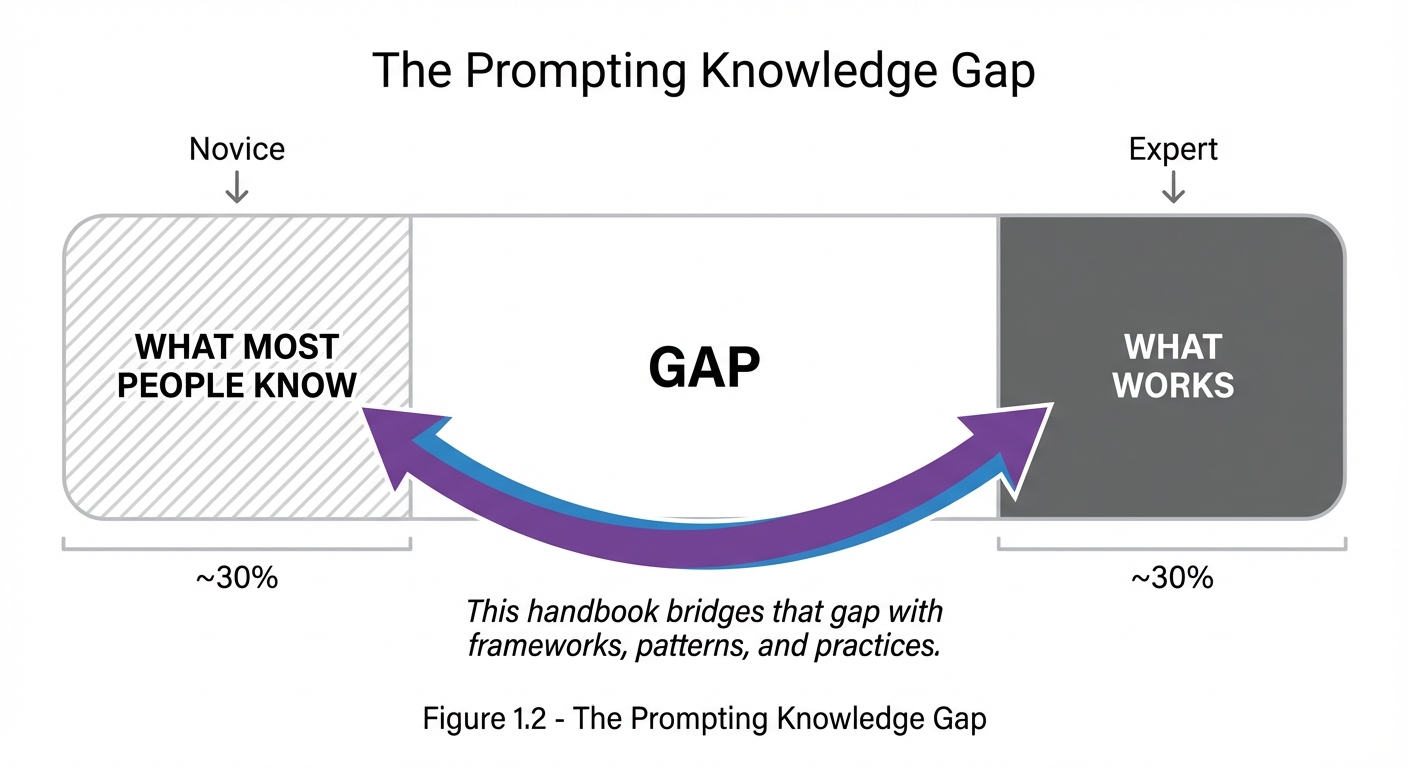 Figure 1.2: The Knowledge Gap in Prompting - The difference between novice and expert isn’t talent—it’s knowledge. This handbook provides the frameworks, patterns, and practices to bridge that gap.
What This Handbook Covers
The 7 Prompting Pillars
This handbook introduces a comprehensive framework built on seven interconnected pillars:
| Pillar | Name | Core Question |
|---|---|---|
| 1 | Clarity | Is the intent unambiguous? |
| 2 | Context | Is relevant background provided? |
| 3 | Constraint | Are boundaries defined? |
| 4 | Composition | Is structure specified? |
| 5 | Calibration | Is tone/style set? |
| 6 | Chain | Is reasoning enabled? |
| 7 | Critique | Is self-evaluation built in? |
The 5 Quality Dimensions
Measure prompt effectiveness across five dimensions:
- Relevance - Does it address the actual request?
- Accuracy - Is it factually correct?
- Completeness - Are all aspects covered?
- Coherence - Is it logically structured?
- Actionability - Can it be directly used?
The 4 Maturity Levels
Track your progression from beginner to master:
| Level | Stage | Characteristics |
|---|---|---|
| 1 | Novice | Learning fundamentals |
| 2 | Practitioner | Applying patterns |
| 3 | Expert | Optimizing systematically |
| 4 | Master | Designing frameworks |
The 6 Control Objectives
Ensure governance and quality:
- Accuracy Control
- Consistency Control
- Safety Control
- Privacy Control
- Compliance Control
- Quality Control
How to Use This Handbook
Reading Approaches
Sequential Reading: Work through chapters in order for a comprehensive understanding.
Reference Use: Jump to specific chapters as needed for particular challenges.
Skill Building: Focus on your current maturity level and work upward.
Recommended Paths
For Complete Beginners:
Chapter 1 → Chapter 2 → Chapter 3 → Chapter 4 → Chapter 18
(Introduction → Concepts → Pillars → Architecture → Best Practices)
For Intermediate Users:
Chapter 3 → Chapter 5 → Chapter 8 → Chapter 13
(Pillars → Context → Chain-of-Thought → Testing)
For Advanced Practitioners:
Chapter 10 → Chapter 11 → Chapter 15 → Chapter 16
(System Prompts → Multi-Turn → Ethics → Security)
Practice Recommendations
- Apply immediately: Try techniques as you learn them
- Document results: Keep notes on what works
- Iterate deliberately: Make one change at a time
- Share learnings: Teach others to reinforce understanding
Self-Assessment: Your Current Level
Quick Assessment
Answer these questions honestly:
- Do you use a consistent structure for your prompts?
- Never (0) / Sometimes (1) / Usually (2) / Always (3)
- Do you specify output format explicitly?
- Never (0) / Sometimes (1) / Usually (2) / Always (3)
- Do you provide relevant context systematically?
- Never (0) / Sometimes (1) / Usually (2) / Always (3)
- Do you test and iterate on prompts?
- Never (0) / Sometimes (1) / Usually (2) / Always (3)
- Do you document successful prompt patterns?
- Never (0) / Sometimes (1) / Usually (2) / Always (3)
Scoring
| Score | Level | Recommendation |
|---|---|---|
| 0-4 | Novice | Start with Parts I-II |
| 5-9 | Practitioner | Focus on Parts II-III |
| 10-12 | Expert | Explore Parts IV-V |
| 13-15 | Master | Review Part VI, contribute back |
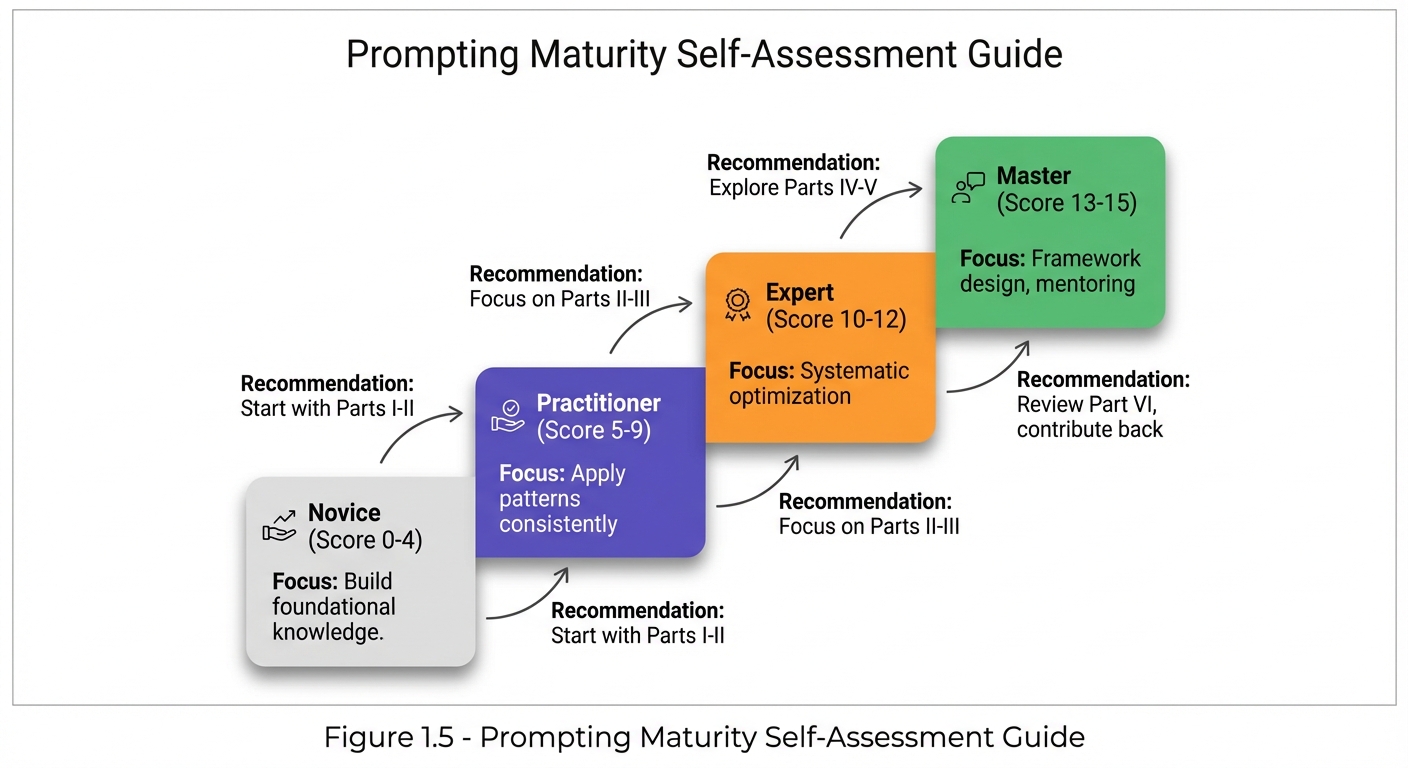 Figure 1.5: Self-Assessment Scoring Guide - Use your assessment score to identify your current maturity level and the recommended reading path for maximum learning efficiency.
Key Takeaways
- Structured prompting transforms AI interaction from guesswork into a systematic discipline
- The quality of output depends on the quality of input
- Frameworks and patterns enable consistent, reproducible results
- This handbook provides 7 Pillars, 5 Quality Dimensions, 4 Maturity Levels, and 6 Control Objectives
- Progressive skill building takes you from novice to master
Summary
Structured prompting is the key to unlocking consistent value from AI systems. As AI becomes increasingly central to how we work, create, and solve problems, the ability to communicate effectively with these systems becomes a critical skill. This handbook provides the frameworks, techniques, and practices you need to master that skill.
The journey from novice to master is achievable for anyone willing to learn and practice. The frameworks in this handbook have been developed and refined through extensive real-world application. They work—and they can work for you.
Review Questions
- What is the key difference between structured and unstructured prompting?
- Name three benefits of structured prompting for organizations.
- What are the 7 Prompting Pillars?
- How can you assess your current prompting maturity level?
- What reading path would you recommend for a complete beginner?
Chapter Navigation
| Previous | Up | Next |
|---|---|---|
| Home | Part I: Foundations | Chapter 2: Core Concepts → |