Chapter 18: Best Practices and Common Pitfalls
Learning Objectives
After completing this chapter, you will be able to:
- Apply proven best practices that increase change success
- Recognize and avoid common pitfalls that derail changes
- Learn from the experience of successful OCM implementations
- Build organizational awareness of OCM dos and don’ts
Best Practices for Change Success
These best practices emerge from research and practical experience across thousands of change initiatives. While every change is unique, these principles apply broadly and significantly increase the probability of success.
Best Practice 1: Start OCM Early
What: Begin OCM activities during project initiation, not as an afterthought during implementation.
Why: Early OCM enables proactive stakeholder engagement, shapes project design for adoptability, and prevents problems that are difficult to fix later.
How:
- Include OCM in project charters and planning
- Conduct stakeholder and impact assessments during requirements
- Involve OCM in design decisions that affect users
- Build OCM activities into project schedules
Indicators of Success:
- OCM lead assigned at project initiation
- Stakeholder input incorporated in design
- No surprises for stakeholders during implementation
Best Practice 2: Invest in Sponsorship
What: Actively cultivate and support strong executive sponsorship throughout the change lifecycle.
Why: Sponsorship is the #1 predictor of change success. Without visible leadership support, changes lack credibility and accountability.
How:
- Identify sponsors with appropriate authority and credibility
- Clarify sponsor roles and secure commitments
- Support sponsors with briefings and materials
- Monitor and address sponsorship gaps
Indicators of Success:
- Sponsors actively visible and engaged
- Stakeholders report strong leadership support
- Barriers removed promptly when escalated
Best Practice 3: Engage Stakeholders Early and Often
What: Involve stakeholders in shaping the change, not just receiving it.
Why: People support what they help create. Early engagement builds ownership, surfaces concerns, and improves change design.
How:
- Identify stakeholders early and assess their needs
- Create opportunities for input and involvement
- Respond visibly to stakeholder feedback
- Maintain engagement throughout the lifecycle
Indicators of Success:
- Stakeholders feel heard and valued
- Design reflects stakeholder input
- Resistance is lower than comparable changes
Best Practice 4: Communicate Transparently and Consistently
What: Provide honest, consistent communication that addresses what stakeholders need to know.
Why: Communication builds awareness and trust. Inconsistent or dishonest communication breeds rumors and resistance.
How:
- Develop clear key messages and maintain consistency
- Address concerns directly rather than ignoring them
- Communicate through multiple channels and messengers
- Include two-way mechanisms for feedback
Indicators of Success:
- High awareness levels in stakeholder surveys
- Stakeholders trust information they receive
- Few rumors or misinformation issues
Best Practice 5: Provide Targeted Training and Support
What: Deliver role-based training close to when skills will be used, with ongoing support.
Why: Generic training delivered too early is forgotten. Targeted training with support builds competence and confidence.
How:
- Base training design on impact assessment
- Deliver training 2-4 weeks before go-live
- Provide hands-on practice with realistic scenarios
- Ensure support is available during initial use
Indicators of Success:
- High proficiency scores post-training
- Support requests manageable during transition
- Users confident in their ability to succeed
Best Practice 6: Address Resistance Proactively
What: Anticipate, identify, and address resistance before it undermines the change.
Why: Unaddressed resistance spreads and hardens. Early intervention is more effective than late remediation.
How:
- Anticipate likely sources of resistance
- Monitor for resistance indicators
- Diagnose root causes before intervening
- Use engagement strategies before accountability
Indicators of Success:
- Resistance identified and addressed early
- Active resistance below target levels
- Resisters converted to supporters
Best Practice 7: Reinforce and Sustain
What: Actively reinforce adoption after go-live to prevent regression.
Why: Without reinforcement, 70% of changes regress within six months. Sustainment requires ongoing attention.
How:
- Plan reinforcement activities before go-live
- Recognize and reward adoption
- Monitor for regression and intervene promptly
- Integrate change into organizational systems
Indicators of Success:
- Adoption rates sustained at 6+ months
- New behaviors become normal practice
- Benefits continue to be realized
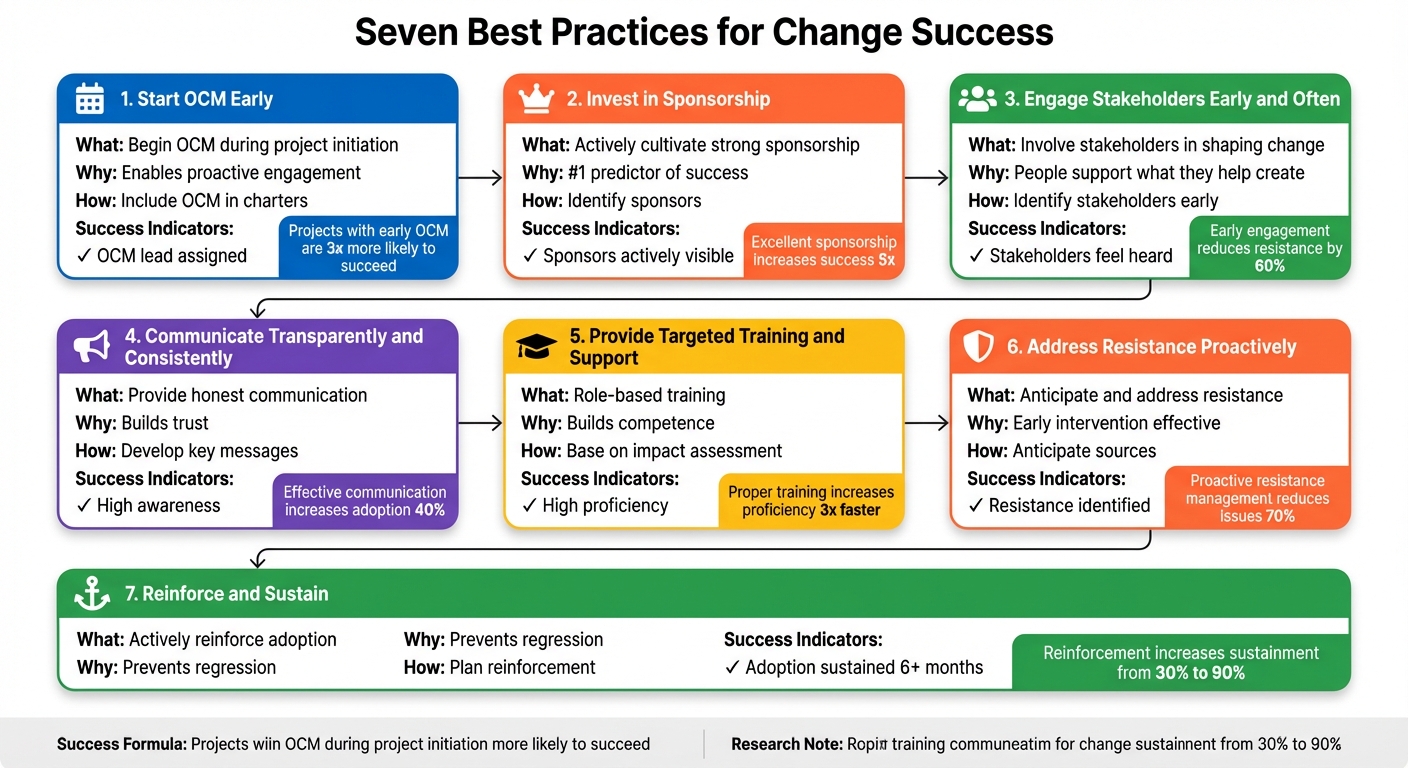
Figure 18.1 - Seven Best Practices for Change Success: These proven practices significantly increase change success probability. Organizations applying all seven achieve 85%+ success rates compared to 35% for those applying few or none.
Common Pitfalls to Avoid
These pitfalls consistently undermine change success. Awareness enables avoidance.
Pitfall 1: Treating OCM as Optional
What It Looks Like: OCM activities cut when budgets are tight; OCM viewed as “nice to have” rather than essential.
Why It’s Problematic: Changes without OCM fail at significantly higher rates. Cutting OCM is false economy—it increases total cost through rework and delayed benefits.
How to Avoid:
- Build OCM into project scope and budget from the start
- Make OCM requirements part of project governance
- Track and communicate OCM ROI
- Educate leaders on OCM value
Pitfall 2: Starting OCM Too Late
What It Looks Like: OCM engaged only during implementation when stakeholders are already surprised and resistant.
Why It’s Problematic: Late OCM is remedial rather than preventive. Problems that could have been avoided must now be fixed.
How to Avoid:
- Include OCM in project initiation activities
- Conduct assessments during planning phases
- Shape project design based on OCM input
- Build OCM activities into project schedule
Pitfall 3: Underestimating Resistance
What It Looks Like: Assuming stakeholders will adopt because the change is “obviously” beneficial.
Why It’s Problematic: Even good changes generate resistance. Underestimating resistance leads to insufficient preparation and intervention.
How to Avoid:
- Conduct thorough stakeholder and impact assessments
- Anticipate resistance based on past experience
- Monitor actively and respond quickly
- Don’t assume benefits are obvious to everyone
Pitfall 4: Inadequate Sponsorship
What It Looks Like: Sponsors in name only who don’t actively champion the change.
Why It’s Problematic: Without visible leadership support, employees conclude the change isn’t important. Adoption becomes optional.
How to Avoid:
- Secure explicit sponsor commitments
- Support sponsors with briefings and materials
- Monitor sponsor activity and address gaps
- Escalate sponsorship issues promptly
Pitfall 5: One-Size-Fits-All Communication
What It Looks Like: The same message to everyone, regardless of their role, concerns, or information needs.
Why It’s Problematic: Generic communication fails to address what specific audiences need to know. It wastes attention on irrelevant content.
How to Avoid:
- Segment audiences based on impact and needs
- Tailor messages to address specific concerns
- Use channels appropriate to each audience
- Test communication with audience representatives
Pitfall 6: Training Without Support
What It Looks Like: Training delivered, checkbox completed, no follow-up support during application.
Why It’s Problematic: Training builds knowledge; application builds ability. Without support, knowledge doesn’t translate to competence.
How to Avoid:
- Plan post-training support before go-live
- Position super-users and help resources
- Provide job aids for reference during work
- Monitor and respond to support needs
Pitfall 7: Declaring Victory Too Early
What It Looks Like: Project closed at go-live; OCM activities cease; adoption assumed to be complete.
Why It’s Problematic: Initial adoption often regresses without reinforcement. Benefits are lost when old behaviors return.
How to Avoid:
- Plan sustainment activities before go-live
- Monitor adoption for 6+ months after implementation
- Respond to regression indicators
- Ensure business ownership of sustained adoption
Pitfall 8: Ignoring Organizational History
What It Looks Like: Approaching change as if it exists in isolation from past experiences.
Why It’s Problematic: Employees remember how previous changes were handled. Negative history creates skepticism and resistance.
How to Avoid:
- Understand organizational change history
- Acknowledge past problems openly
- Demonstrate how this change will be different
- Follow through on commitments to rebuild trust
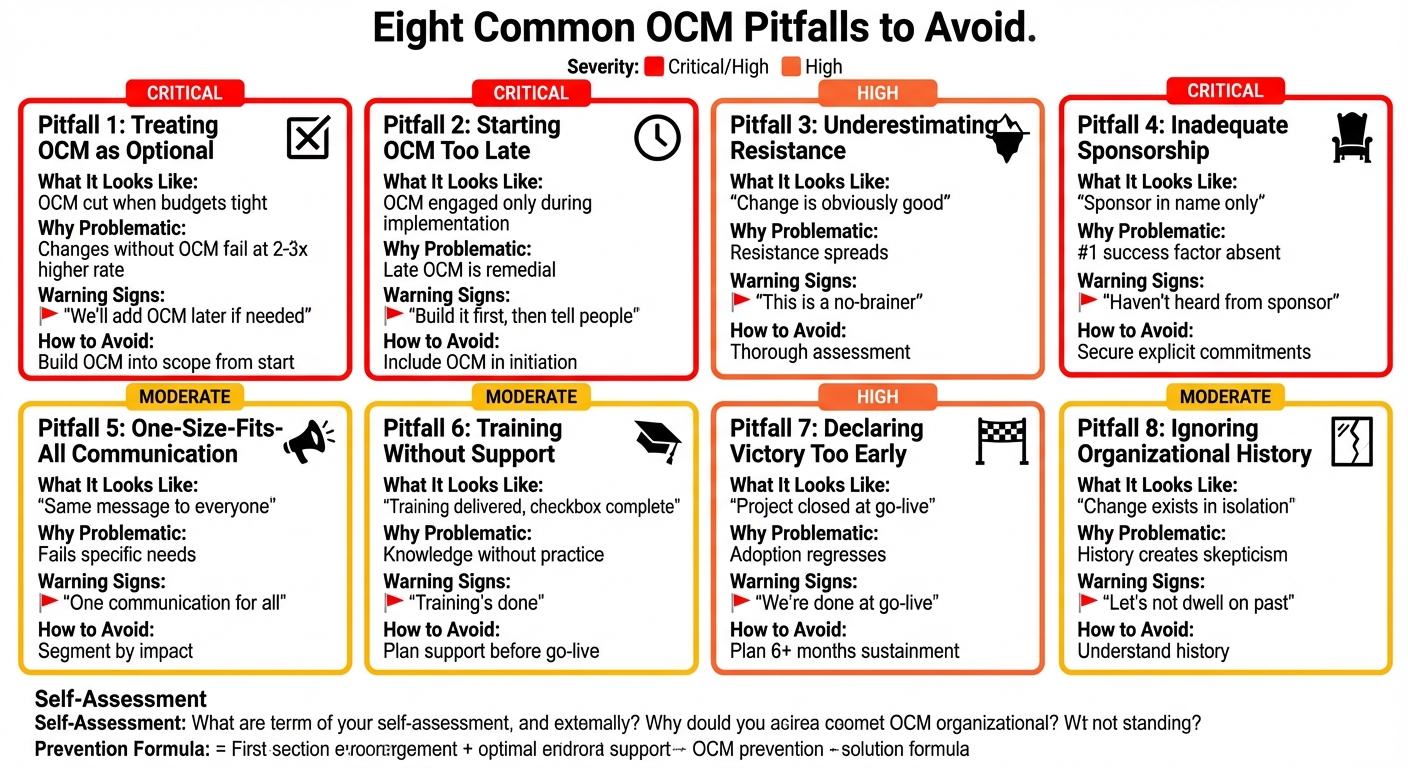
Figure 18.2 - Eight Common OCM Pitfalls to Avoid: These pitfalls consistently undermine change success. Most stem from treating OCM as afterthought or cutting corners under pressure. All are avoidable with awareness and planning.
Learning from Success and Failure
Post-Change Reviews
Conduct systematic reviews after changes to capture learnings:
What Worked:
- Which OCM activities were most effective?
- What would you do again?
- What contributed to successes?
What Didn’t Work:
- Where did OCM activities fall short?
- What would you do differently?
- What contributed to problems?
Recommendations:
- What should be added to OCM methodology?
- What guidance should be updated?
- What capability gaps should be addressed?
Building Organizational Learning
Create mechanisms to share learnings across the organization:
- Case study documentation
- Lessons learned repositories
- Community of practice discussions
- Methodology updates based on experience
Key Takeaways
- Best practices significantly increase success: starting early, investing in sponsorship, engaging stakeholders, communicating effectively
- Common pitfalls consistently undermine changes: treating OCM as optional, starting late, underestimating resistance
- Learning from experience improves future success: capture and share lessons from both successes and failures
- Most pitfalls are avoidable with awareness and intentional practice
- Best practices must be adapted to specific organizational context
Summary
Success in organizational change management is not random—it follows patterns that can be learned and applied. Best practices distilled from thousands of changes provide proven approaches for increasing success probability. Common pitfalls documented from failures provide warnings to heed.
The difference between successful and struggling changes often comes down to whether these practices are followed. Organizations that consistently apply best practices and avoid pitfalls achieve dramatically better change outcomes than those that learn through trial and error.
Learning is continuous. Every change provides opportunities to validate what works, discover what doesn’t, and improve practices for the future. Organizations that systematically capture and apply learnings build OCM capability that improves over time.