Chapter 13: Reinforcement and Sustainability
Learning Objectives
After completing this chapter, you will be able to:
- Understand why reinforcement is critical for sustained change
- Design recognition and reward mechanisms that support adoption
- Integrate change into performance management and organizational systems
- Monitor for regression and implement sustainment interventions
- Transition from change project to business-as-usual
The Reinforcement Challenge
Reinforcement is the final element of the ADKAR model, yet it is frequently the most neglected. Organizations invest significant effort in building awareness, desire, knowledge, and ability, only to see adoption erode after implementation when reinforcement is absent.
The statistics are sobering. Research suggests that 70% of change initiatives that achieve initial adoption experience significant regression within six months without active reinforcement. People naturally return to familiar patterns when new behaviors are not consistently supported and rewarded.
Reinforcement addresses a fundamental challenge: change is hard, and old habits are comfortable. Even when people have the awareness, desire, knowledge, and ability to change, sustaining new behaviors requires ongoing support. Without reinforcement, the pull of the familiar gradually overcomes the push toward the new.
Why Changes Regress
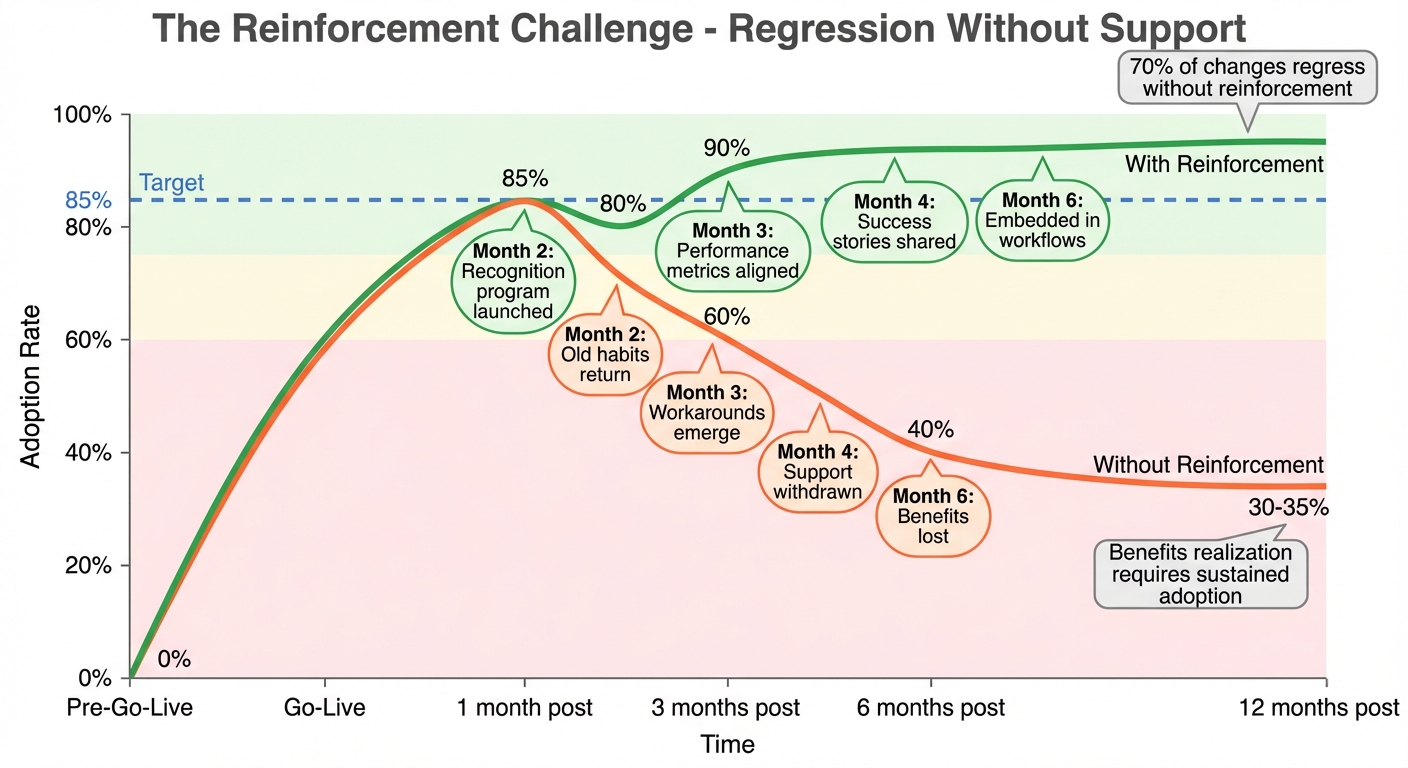
Figure 13.1: The Reinforcement Challenge - Without active reinforcement, 70% of changes experience significant regression within six months. Reinforcement activities sustain adoption and protect benefits realization.
Habit Reversion: Old behaviors are automatic; new behaviors require conscious effort
Environmental Triggers: Physical and social environments cue old behaviors
Competing Priorities: Attention shifts to new initiatives; focus on current change wanes
Sponsor Disengagement: Leaders move on to other priorities; visible support decreases
Reward Misalignment: Performance systems still reward old behaviors
Insufficient Practice: New skills didn’t become automatic before support withdrew
Reinforcement Mechanisms
Recognition Programs
Recognition reinforces adoption by acknowledging and celebrating those who embrace change:
Formal Recognition
- Awards and honors for adoption champions
- Public acknowledgment in meetings and communications
- Certificates or credentials for proficiency achievement
- Nomination programs for peers to recognize each other
Informal Recognition
- Personal thank-you from managers and sponsors
- Shout-outs in team meetings
- Social recognition in collaboration platforms
- Small tokens of appreciation
Recognition Best Practices:
- Recognize specific behaviors, not just outcomes
- Be timely—recognize soon after the behavior
- Be sincere—recognition must feel genuine
- Be inclusive—recognize effort, not just stars
- Be visible—let others see recognition happening
Reward Alignment
Beyond recognition, tangible rewards must align with adoption expectations:
Performance Management Integration
- Include adoption expectations in performance goals
- Evaluate adoption in performance reviews
- Link compensation decisions to adoption outcomes
- Consider adoption in promotion decisions
Incentive Alignment
- Ensure incentive structures don’t reward old behaviors
- Create positive incentives for adoption when appropriate
- Remove incentives that conflict with change
- Align team incentives with collective adoption
Accountability Mechanisms
Reinforcement includes accountability for non-adoption:
Expectations Clarity: Clear communication of adoption expectations
Monitoring: Tracking of compliance with adoption requirements
Consequence Communication: Understanding of what happens with non-compliance
Consistent Application: Fair and consistent enforcement across the organization
Escalation Path: Process for addressing persistent non-adoption
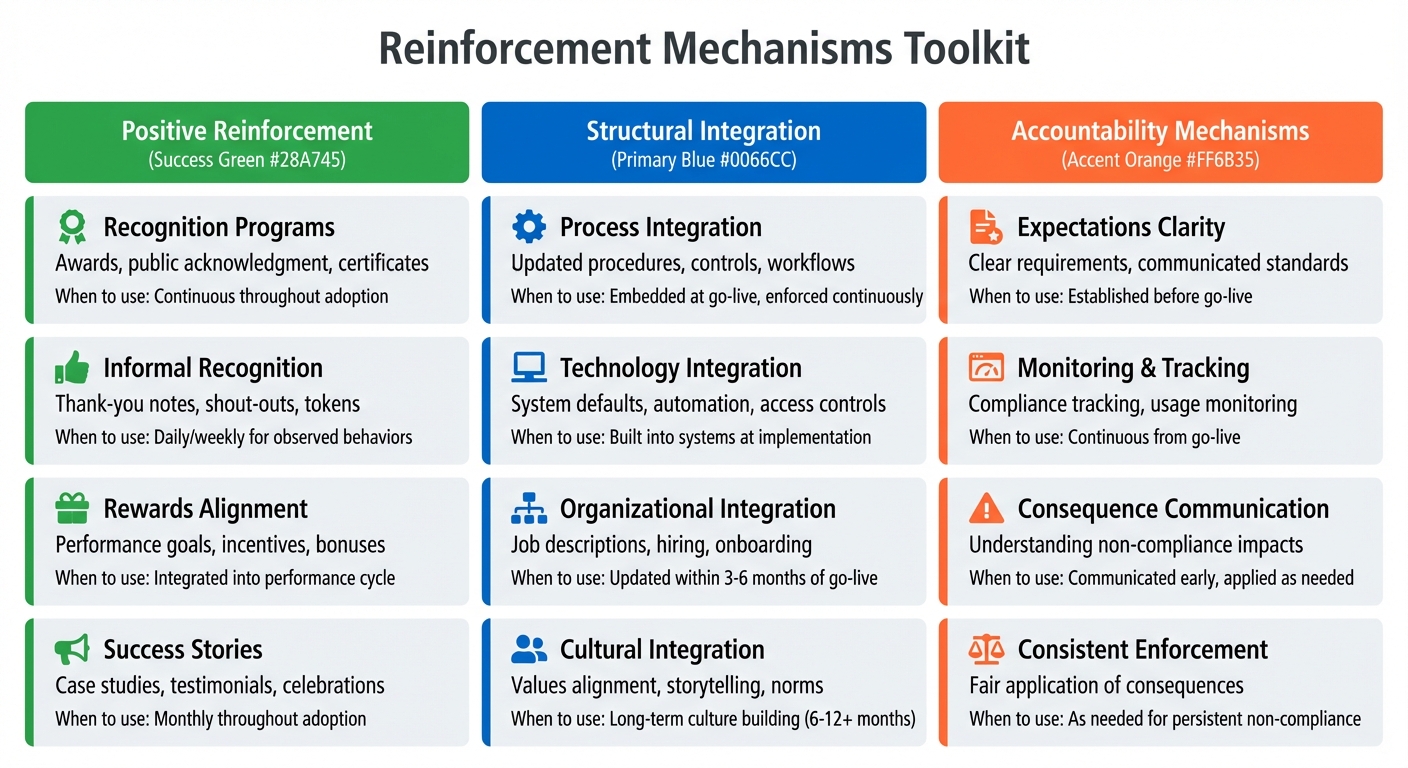
Figure 13.2: Reinforcement Mechanisms Toolkit - Effective reinforcement combines positive recognition, structural integration, and appropriate accountability. Use multiple mechanisms in combination for maximum sustainability.
Embedding Change in Systems
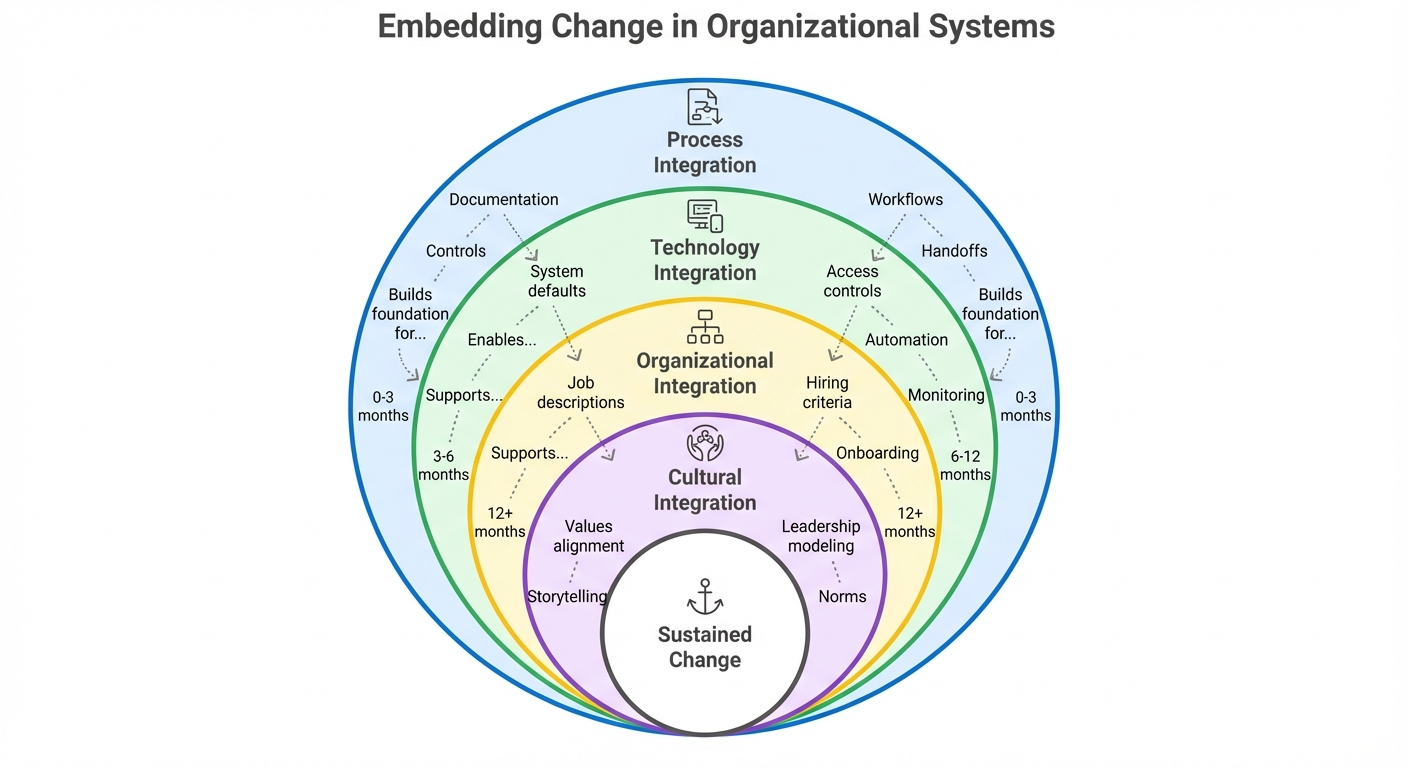
Figure 13.3: Embedding Change in Organizational Systems - Sustainable change requires integration across multiple organizational layers. Each layer builds on the previous, with cultural integration representing deepest embedding.
Sustainable change becomes embedded in organizational systems so that it persists without ongoing project support.
Process Integration
Documentation: Update process documentation, procedures, and work instructions
Workflows: Modify workflow systems to enforce new processes
Controls: Implement controls that prevent reversion to old approaches
Handoffs: Update handoff points and integration with other processes
Technology Integration
System Defaults: Configure systems to default to new processes
Access Controls: Remove access to deprecated systems and features
Automation: Automate compliance where possible
Monitoring: Build ongoing usage monitoring into systems
Organizational Integration
Job Descriptions: Update job descriptions to reflect new responsibilities
Hiring Criteria: Include new skills in hiring and selection criteria
Onboarding: Incorporate change into new employee onboarding
Organizational Structure: Adjust structure to support new ways of working
Cultural Integration
Values Alignment: Connect change to organizational values
Storytelling: Incorporate change success into organizational narrative
Leadership Modeling: Ensure leaders consistently model new behaviors
Norms Establishment: Help new behaviors become “how we do things here”
Monitoring for Regression
Warning Signs of Regression
Watch for indicators that adoption is slipping:
Usage Decline: Decreasing system usage or process compliance over time
Workaround Emergence: New workarounds appearing that bypass change
Old Behavior Return: People reverting to previous approaches
Support Spikes: Increased support requests indicating confusion or difficulty
Complaint Increase: Rising complaints or negative feedback about change
Ongoing Monitoring Mechanisms
Automated Tracking: System usage analytics that continue post-project
Periodic Audits: Regular compliance checks and process audits
Pulse Surveys: Continued sentiment monitoring at reduced frequency
Manager Check-ins: Ongoing feedback from managers about team adoption
Metrics Review: Regular review of business metrics dependent on adoption
Responding to Regression
When regression is detected, respond promptly:
Diagnose Cause: Understand why regression is occurring
Targeted Intervention: Address specific causes with appropriate action
Communication: Reinforce importance and expectations
Support: Provide additional help for those struggling
Accountability: Apply consequences for intentional non-compliance
Transition to Business-as-Usual
Planning the Transition
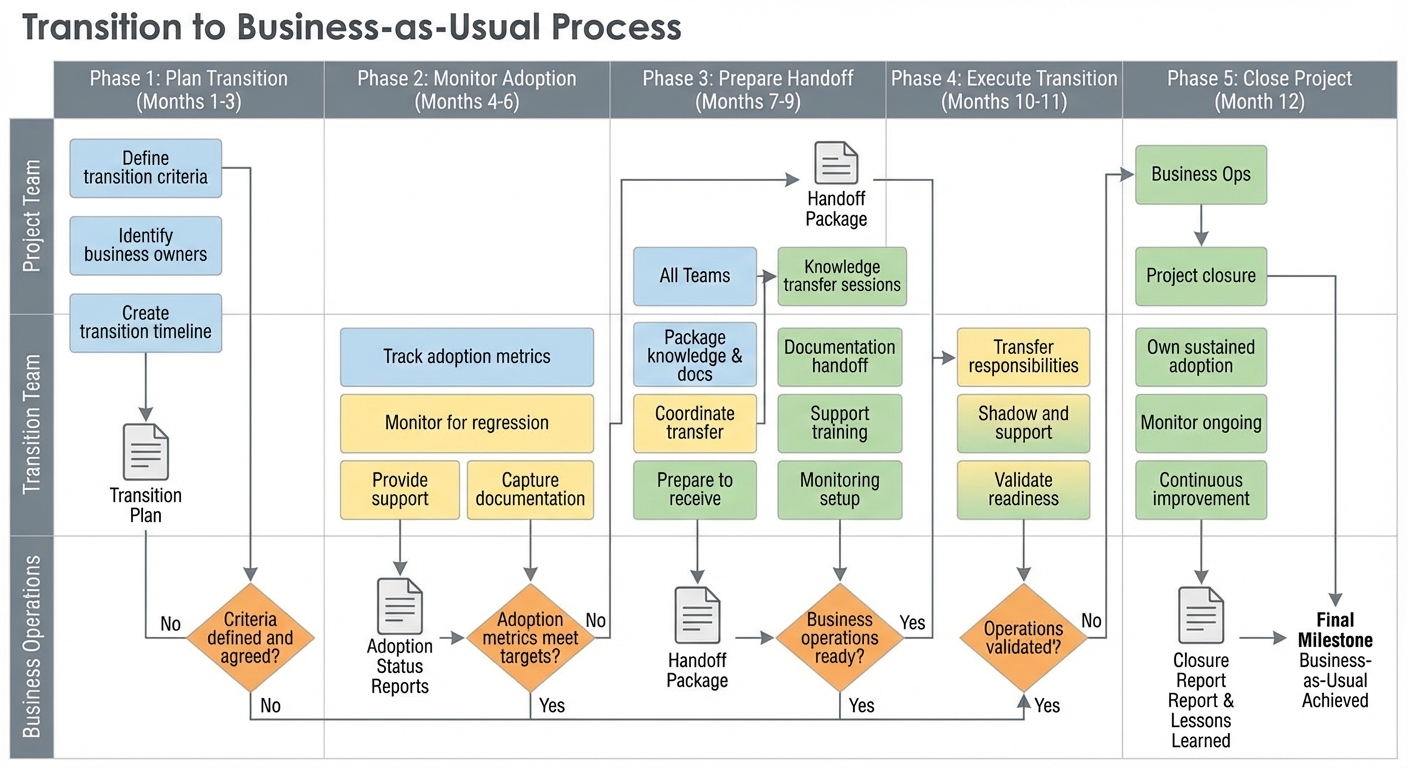
Figure 13.4: Transition to Business-as-Usual Process - Planned transition ensures smooth handoff from project team to business operations with clear criteria, coordinated activities, and validated readiness at each stage.
The goal of any change initiative is to transition from project mode to business-as-usual where change is simply “how we work.”
Transition Criteria:
- Adoption metrics meet targets consistently
- Regression indicators are stable and acceptable
- Support volumes have normalized
- Business owners are ready to assume ownership
- Systems and processes are fully documented
Transition Timeline:
- Begin transition planning before go-live
- Implement gradual transition, not abrupt handoff
- Allow overlap period for knowledge transfer
- Define clear milestone for project closure
Transferring Ownership
Transfer ownership of sustained adoption from project team to business:
Documentation Handoff: All procedures, training materials, and documentation transferred
Knowledge Transfer: Project team knowledge shared with business owners
Support Transition: Support responsibility moved to permanent functions
Monitoring Handoff: Ongoing monitoring transferred to operations
Issue Escalation: Clear paths for escalating issues that arise
Sustaining Without Project Team
After project closure, sustain adoption through:
Business Ownership: Clear business owner accountable for sustained adoption
Embedded Support: Super-users and subject matter experts within business
Ongoing Training: New employee training and refresher programs
Continuous Improvement: Process for making ongoing improvements
Metrics Monitoring: Regular review of adoption and outcome metrics
Building Organizational Change Capability
Change-Ready Culture
Beyond individual change initiatives, organizations can build cultural capacity for change:
Change Expectation: Employees expect and accept ongoing change
Resilience: People bounce back from change disruption more quickly
Adaptability: Individuals actively embrace new ways of working
Learning Orientation: Organization continuously learns and improves
Institutionalizing OCM
Organizations with mature OCM capability build change management into their operations:
OCM Standards: Defined approaches applied consistently across changes
OCM Resources: Dedicated OCM capability (roles, skills, tools)
OCM Governance: Change management requirements for projects
OCM Measurement: Consistent measurement of change success
OCM Learning: Continuous improvement of OCM approaches
Key Takeaways
- Reinforcement is essential—without it, 70% of changes regress within six months
- Multiple mechanisms reinforce adoption: recognition, rewards, accountability, system integration
- Embedding change in organizational systems makes it sustainable without ongoing project support
- Ongoing monitoring detects regression early when intervention is still possible
- Planned transition ensures smooth handoff from project to business ownership
- Building organizational change capability makes all future changes easier
Summary
Reinforcement and sustainability ensure that change lasts beyond the project implementation. Without active reinforcement, the natural pull toward familiar behaviors overcomes the adoption achieved during implementation, and organizations lose the benefits they invested in achieving.
Effective reinforcement combines recognition, reward alignment, accountability, and integration into organizational systems. Monitoring continues after implementation to detect regression early. Planned transition moves ownership from project team to business operations, ensuring sustained support.
The ultimate goal is not just to implement change but to make it stick. Organizations that master reinforcement and sustainability achieve lasting benefits from their change investments and build capability that makes all future changes more successful.